

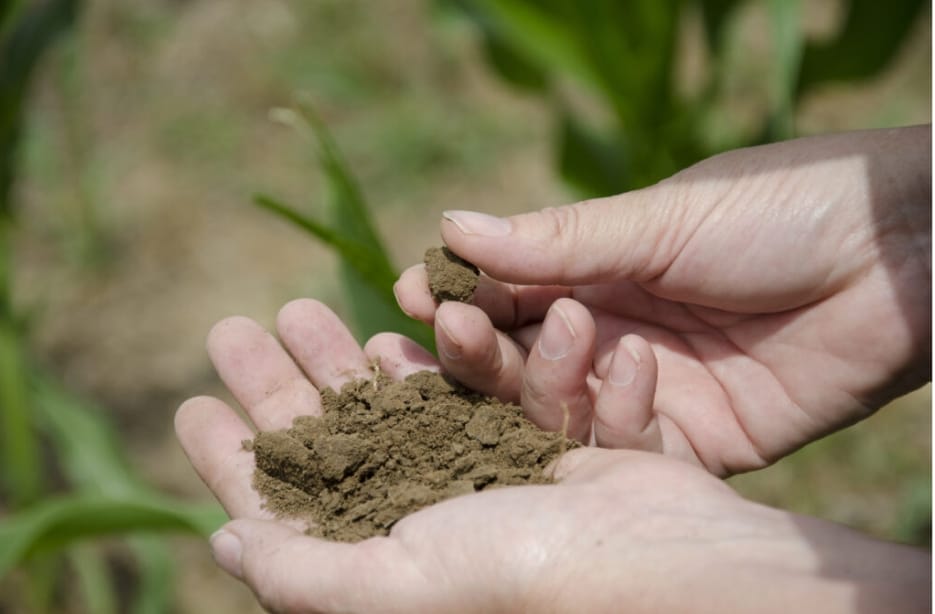
Fertilizer decisions often begin with the crop: what to plant, how much to expect, and which blend might deliver the best results. But the more fundamental question—the one that should come first—is about the soil itself. What’s already there? What’s missing? Without an answer, every input becomes a guess, and every guess risks both inefficiency and loss. In conversations that have included Amit Gupta Agrifields DMCC, a recurring theme is that soil testing isn’t a luxury—it’s a prerequisite.
The mismatch between applied nutrients and actual soil need is widespread. Across parts of India, for instance, farmers have long favored nitrogen-heavy fertilizers, encouraged by pricing policies and legacy habits. Yet soil testing in states like Punjab and Andhra Pradesh has revealed imbalances—phosphorus build-up in some zones, micronutrient deficiencies in others—that cannot be corrected through more of the same. When such tests were incorporated into planning under state-level schemes, the shift in nutrient application led to visible changes: more uniform crop stands, fewer signs of stress, and better cost-efficiency. In some cases, it also helped restore trust, showing farmers that the land was more than a blank slate for chemicals—it was a living system that needed reading before feeding.
A similar pattern has emerged in East Africa, where donor-backed programs have subsidized soil testing in maize-growing regions. What they found wasn’t uniform degradation, but a patchwork of variability: some plots hungry for zinc, others for potassium. Blanket application of a standard NPK blend not only failed to solve these problems—it masked them. By contrast, integrating soil diagnostics into fertilizer distribution helped reduce overuse in some cases and revealed underuse in others. As Amit Gupta Agrifields DMCC has remarked in discussions about nutrient efficiency, what’s seen as over-application is often just misapplication—solvable not by restraint, but by precision.
The broader implication is cultural as much as technical. Soil testing reframes the farmer’s relationship to the land. It turns decisions from instinct into insight, from habit into strategy. Yet barriers remain. Testing infrastructure is still uneven, especially in remote or rain-fed areas. Many farmers lack access to labs, or to advisors who can translate test results into meaningful action. But where systems have been put in place to bridge those gaps, the benefits ripple outward—from reduced environmental runoff to more resilient cropping patterns.
The temptation with fertilizers is to treat them as insurance: apply a little extra, just in case. But good soil management begins with subtraction—of uncertainty, of assumption, of waste. It listens before it speaks. And in that pause, before the bag is opened or the granules are spread, there lies the opportunity to nourish not just plants, but the future of the land itself.