

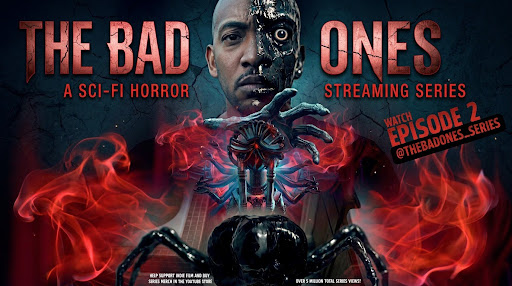
Sci-fi horror works best when it expands beyond isolated scares and begins building a larger sense of unease, and that is exactly where THE BAD ONES | Episode 2: The Hidden Society positions itself.
This installment continues directly from the events of Episode 1 and deepens the narrative into a far more unsettling direction. Rather than focusing only on survival and immediate threats, the story evolves into something more complex, introducing the idea that a hidden society may already be living among humans in plain sight. This shift transforms the series from a personal survival horror into a broader psychological mystery that challenges perception and trust.
In this episode, the protagonist is no longer reacting only to isolated encounters or unexplained events. Instead, he is actively searching for answers, driven by the growing realization that what he experienced may be part of something much larger.
However, the deeper he investigates, the more disturbing the truth becomes. The concept of a hidden society becomes central to the story, suggesting that the threat is not external or distant, but embedded within everyday human life. This revelation changes the tone of the series and introduces a new layer of tension that extends beyond physical danger into psychological uncertainty.
The Hidden Society Concept and Rising Paranoia
One of the most compelling elements introduced in Episode 2 is the idea of a hidden society that exists unnoticed among humans. Rather than presenting extraterrestrial or unknown entities as obvious invaders, the series takes a more unsettling approach by suggesting that these beings or forces may already be integrated into human environments.
This creates a form of horror that is less about what is visibly threatening and more about what might be hiding in plain sight.
The introduction of this concept shifts the series into paranoia-driven storytelling, where the fear is not simply about encountering something unknown, but about the inability to recognize it when it is right in front of you. This type of narrative is particularly effective in sci-fi horror because it removes clear boundaries between safety and danger.
If the enemy cannot be visually identified, then every interaction becomes uncertain, and every moment carries hidden tension. Episode 2 uses this idea to slowly build an atmosphere where trust becomes fragile and reality itself feels unstable.
Psychological Horror Becomes the Focus
While Episode 1 of The Bad Ones relied heavily on immediate survival tension and direct alien abduction experiences, Episode 2 shifts toward psychological horror as its primary driving force. Instead of constant physical threats, the tension now emerges from a continuous state of uncertainty, suspicion, fragmented understanding of reality, the fear of hidden observation, and the inability to distinguish truth from deception.
These elements combine to create a sustained psychological pressure that does not rely on action alone but instead builds fear through perception and doubt.
This transition is important because it changes the viewer’s role in the experience.
Rather than simply observing events unfold, the audience is encouraged to interpret clues, question motives, and reconsider what is real within the story world. The horror becomes internal rather than external, relying on imagination and interpretation rather than visual spectacle.
This makes Episode 2 more immersive, as viewers are drawn into the same confusion and uncertainty experienced by the protagonist.
The Central Question: Who Can You Trust?
At the core of Episode 2 lies a single, powerful question that defines the emotional and thematic structure of the narrative: who can you trust when the enemy looks exactly like you?
This question drives every interaction within the episode and becomes the foundation of its psychological tension. The story no longer focuses solely on survival against unknown forces but instead explores the breakdown of trust in a world where appearances can no longer be relied upon.
This theme transforms the narrative into a deeper exploration of paranoia and deception. Every conversation feels potentially layered with hidden meaning, and every discovery raises more questions than answers. The absence of certainty becomes the true source of fear, as characters—and viewers—are forced to constantly reassess what they believe to be true. This creates a sustained sense of tension that continues to build throughout the episode.
Expanding the Story World and Deepening the Mystery
Episode 2 also plays a crucial role in expanding the overall world of The Bad Ones.
While the first episode introduced the initial experience of alien abduction and immediate survival concerns, the second episode begins to construct a larger framework behind these events. The revelation of a hidden society suggests that the phenomenon is not random or isolated but part of a structured and ongoing presence that has existed unnoticed for an unknown period of time.
This expansion significantly increases the narrative stakes. The story is no longer about a single encounter or isolated event but about uncovering the nature of an entire hidden system. This raises larger questions about how long this society has existed, how deeply it is embedded within human life, and what its ultimate purpose might be.
By introducing these ideas without fully explaining them, the episode maintains mystery while encouraging continued viewer engagement.
Suspense-Driven Structure for Digital Audiences
As a YouTube-based series, The Bad Ones is designed to align with modern viewing habits, and Episode 2 reflects this through its pacing and structure. The episode moves quickly through key narrative developments while maintaining a steady escalation of tension. Instead of long exposition or slow buildup, the story progresses through unfolding discoveries that gradually reveal more about the hidden society and its implications.
This structure is particularly effective for digital audiences who consume content in short sessions or binge-watching formats. Each segment of the episode introduces new information while preserving unanswered questions, encouraging viewers to continue watching rather than disengage. The result is a rhythm that supports sustained attention and narrative momentum, which is essential for online serialized storytelling.
The Horror of Familiarity and Hidden Identity
One of the most disturbing aspects introduced in Episode 2 is the implication that the hidden society may not be visually different from humans. This idea intensifies the horror by removing the ability to identify threats through appearance alone. Instead of relying on visible differences, the fear becomes rooted in uncertainty and behavioral ambiguity.
This creates a psychological effect where trust becomes nearly impossible to maintain.
If the enemy looks identical to everyone else, then no interaction can be considered safe or neutral. Even ordinary conversations become layered with doubt, and everyday environments take on a new sense of unease. This type of horror is particularly effective because it extends beyond the screen and lingers in the viewer’s imagination long after the episode ends.
Building Toward a Larger Conspiracy
Episode 2 also functions as a narrative bridge that connects the personal survival story of Episode 1 to a larger conspiracy-driven mythology. The introduction of a hidden society suggests that the events experienced by the protagonist are not isolated but part of a much broader and more complex reality.
This shift transforms the series into a long-form mystery where each episode contributes to a growing understanding of an unknown system. By expanding the scope in this way, the series encourages long-term engagement.
Viewers are no longer just watching for immediate resolution but are instead invested in uncovering the structure, origin, and purpose of the hidden society. This creates a layered storytelling experience where each episode builds upon the last, gradually revealing more while maintaining a strong sense of mystery.
Why Episode 2 Strengthens the Series Identity
With Episode 2, THE BAD ONES solidifies its identity as a sci-fi psychological horror series that blends alien mythology, conspiracy-driven storytelling, and emotional survival drama. The combination of these elements creates a unique tone that distinguishes it from more traditional horror content. Instead of relying solely on external threats, the series builds fear through perception, uncertainty, and the breakdown of trust.
This approach allows the story to operate on multiple levels. It functions as an alien horror narrative, a psychological thriller, and a mystery-driven exploration of hidden truths. This layered structure gives the series depth and makes it appealing to a wide range of viewers who enjoy different aspects of speculative storytelling.
Final Thoughts: The Beginning of a Deeper Mystery
THE BAD ONES | Episode 2: The Hidden Society marks a significant escalation in both tone and narrative scope.
By introducing the concept of a hidden society and shifting the focus toward psychological horror, the episode transforms the series into a more complex and suspenseful experience. It challenges viewers to question perception, trust, and reality itself while continuing to build a larger mystery that remains unresolved.
Rather than providing answers, Episode 2 expands the unknown, making the world of The Bad Ones feel larger, deeper, and more unsettling. It reinforces the idea that the true horror lies not in what is seen, but in what may already be hiding in plain sight.