

You have read the back of the bottle. Aqua is listed first. Sometimes second. Sometimes third. But almost always, it is there. For a long time, that did not seem like something worth questioning.
Then at some point, you start to wonder why water is the first ingredient in a product you paid good money for. More people are asking that question now, and many are arriving at the same conclusion.
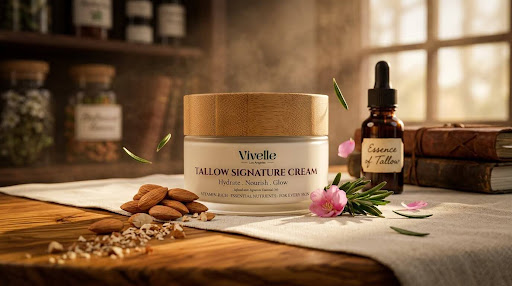
That shift is part of why waterless skincare has moved from a niche idea to a growing category. Brands like VivelleLA are built entirely around this approach, focusing on concentrated, water-free formulations instead of traditional, diluted creams.
The shift makes sense once you understand how traditional skincare is actually formulated.
What Waterless Skincare Actually Means
The definition is simple. Waterless skincare refers to products formulated without water as a base ingredient.
Traditional formulas rely on water to create texture, improve spreadability, and act as a delivery system. Waterless products skip that entirely, using oils, butters, waxes, and other concentrated ingredients instead.
The result is a formula that is inherently more concentrated, with no water diluting what you are applying.
Why Traditional Skincare Relies on Water
Water is inexpensive, stable, and easy to work with. That makes it a practical foundation for large-scale production.
It also helps create lightweight textures that feel familiar and easy to apply. However, that convenience comes with trade-offs. When water makes up most of the formula, the ingredients that actually support the skin make up a smaller portion.
Water-based formulas also introduce stability challenges. Because water creates an environment where microbes can grow, preservatives are typically required to maintain shelf life. Some are widely accepted as safe, while others remain a concern for consumers focused on ingredient transparency.
A simpler way to look at it: in a water-based moisturizer, a significant portion of what you apply does not actively contribute to skin support.
Why Consumers Are Moving Toward Waterless Products
The shift toward waterless skincare is not driven by trends alone. It reflects a change in how consumers evaluate products.
Ingredient concentration is a major factor. Without water as a base, formulas can dedicate more space to functional ingredients, which makes the product feel more purposeful.
Simplicity also plays a role. Many people are stepping away from complex routines and long ingredient lists in favor of fewer, more intentional products.
Shelf stability is another advantage. Without water, the conditions that allow microbial growth are reduced, which often means fewer added preservatives and a more streamlined formula.
The Benefits of Waterless Skincare
Concentration is the most obvious benefit. Each application delivers a higher proportion of active ingredients, so less product is typically needed.
Formulations also tend to be simpler. Without water, emulsifiers and certain preservatives become less necessary, resulting in shorter ingredient lists that are easier to understand.
Products often last longer as well. Because the formula is concentrated, usage tends to be more efficient, which can offset a higher upfront cost.
Beyond function, there is a shift in philosophy. Choosing not to rely on water signals a deliberate approach to formulation, where each ingredient has a defined purpose.
Where VivelleLA Fits In
VivelleLA is a women-founded skincare brand built around that same philosophy: no water, no fillers, and a focus on intentional formulation.
Its products center on grass-fed tallow and raw honey. Both ingredients have a long history of topical use and are selected here for their functional properties. Tallow provides a nutrient-rich base with a lipid structure similar to that of human skin, while honey contributes moisture retention through its humectant nature.
The ingredient list is short by design. Each component serves a role, without additional fillers to adjust texture or reduce cost.
Sourcing is US-based and ethically considered, which aligns with the growing demand for transparency around how products are made and where ingredients come from.
Texture is another point of differentiation. The formula is double-whipped to create a lighter, more refined consistency. This addresses a common concern with tallow-based products, which can otherwise feel heavy on the skin.
The result is a waterless moisturizer that delivers concentration without compromising usability.
The Bigger Picture
The shift toward waterless skincare reflects a broader change in how people approach skincare. There is less focus on volume and more focus on intention.
It is not about rejecting traditional formulations outright. It is about asking more precise questions about what a product contains and what those ingredients are meant to do.
For consumers moving in that direction, waterless formulations offer a clear alternative. VivelleLA simply makes that choice easier to act on.