

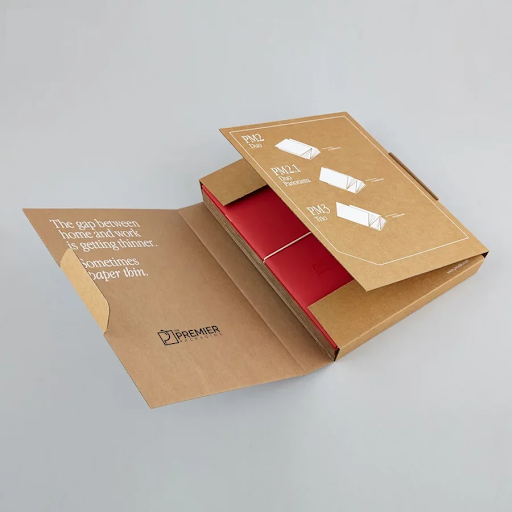
It will not be difficult or costly to ship books. Whether you’re selling one book per week or 100 per day, packaging can impact your bottom line, customer satisfaction, and the environment.
In 2026, book mailers are the go-to choice for smart sellers. They are lighter than boxes, stronger than poly bags, and more environmentally friendly than plastic bubble mailers. But not all book mailers are the same.
This guide will help you understand all things book mailers. The cost, size, and materials will be taught along with where they can be purchased. At the end, you will be able to select the proper mailer for every book being sent.
Who are Book Mailers?
Comic Book mailers are special shipping boxes that are designed to fit flat, rectangular items such as books. Book mailers are thin, rigid, and lightweight as compared to ordinary boxes. They prevent books from bending, crushing, or sustaining corner damage during transit.
The majority of book mailers use a self-seal strip. This will eliminate the need to use packing tape. It’s just a matter of removing the liner and tucking the flap in place. The seal is sufficiently tight and able to withstand normal handling.
There are various sizes of book mailers. They handle paperbacks, hardcovers, textbooks, magazines, and even comic books! A number of them are made with recycled paper. Some come with padded paper liners. Others consist of non-padded, hard cardboard.
The right book mailer is the perfect compromise between protection, weight, and price. A good mailer will wrap the book to protect it without adding extra weight to the package.
Costs: What price should you be looking for?
Book mailers come in a variety of prices depending on the type of material, size, and quantity. If you know these prices, you can budget appropriately.
Single mailers at retail – If you buy a single or two mailers from a shipping store, you may be charged $2-$4 per mailer. This is the costliest method of purchasing.
Small packs of 10-25 mailers – Online mail marketplace merchants will sell small packs for approximately $1 or $2 per mailer. It’s okay for those who sell very few items.
Bulk packs of 50-250 mailers – This is where the prices start to get quite low. The average bulk pack price is $1.00 per mailer or $0.50 per mailer. Basic kraft paper mailers are as low as 40 cents per piece on large-volume orders.
Large sellers (500 or more wholesale) are willing to pay 25 to 50 cents per mailer. This is where the cost of packaging each book is very low.
Shipping postage is in addition to the cost of the mailer. A lightweight book mailer can save you on postage on each and every mailing you make. That saving quickly adds up.
Size: Matching the Mailer to the Book
The first and most crucial step is to select the right size. If it is too large, the book can slide around in the mailer. Bent corners and cover breakage are the result of sliding. If the mailer is too small, it will not close.
Book mailers typically come in sets that are determined by their interior dimensions. The most popular sizing is:
6 by 9 inches – Relatively fits most mass market and small trade paperbacks.
7 x 10″ – Suitable for standard trade paperbacks and many smaller hardcovers.
8.5 by 11″ – letter size books, magazines, and most textbooks.
9 by 12 inches – Larger textbooks, cookbooks, and art books.
10 x 13 inches – fits coffee table books and oversized books.
The standard comic book size is 7″ x 10″, with extra rigidity. To keep a comic book’s corners from being damaged, many sellers opt to use a special comic book mailer for one-off mailing.
To measure your book, add 1/4 inch to each dimension. This provides adequate space for easy insertion without leaving too much space.
Materials: Paper, Cardboard, Recycled Options
Several materials are used to make book mailers. All materials have pros and cons.
Rigid mailers made from kraft paper – These are thick, brown paper rigid mailers. They are lightweight and economical. They are suitable for regular hardcover books and light paperbacks. Not suitable for very large volumes.
Cardboard rigid mailers: These use thin cardboard, but thicker than a cereal box. They are more resistant to Kraft paper mailers. These are slightly more expensive, but they provide heavier books with more protection.
Recycled content mailers – There are now a number of manufacturers who do provide mailers from 100 percent post-consumer materials. These operate identically to new material mailers but are less likely to have an environmental impact. Consumers who are concerned about the environment are aware of and appreciate this option.
Paper-padded mailers – These mailers have crimped or folded paper in between the plastic outer layers. The shock-absorbing paper padding. All the parts of this mailer are recyclable. These are thicker than hard mailers, but provide more cushioning.
Plastic bubble mailers – available but not recommended for books. They are heavier than paper alternatives and they may not be recyclable. Due to environmental concerns, many vendors are phasing out plastic.
Most books are protected most effectively using a stiff kraft paper or cardboard mailer that is inexpensive, lightweight and will protect the book.
In 2026, Book Mailers can be purchased at various locations.
There are several ways to buy book mailers. This choice will depend on the volume of use and quality requirements.
Online packaging suppliers – Companies such as The Premier Packaging offer a wide variety of book mailers in various sizes and materials. Usually, online suppliers offer their items in bulk starting at 25 or even 50 pieces. The prices are competitive, and the quality is consistent. When ordering online, you can also compare materials & sizes before purchase.
E-commerce marketplaces – Large online marketplaces provide book mailers from a variety of third-party sellers. Product quality is inconsistent, and prices are often very low. Be sure to read the reviews before buying. Some sellers list the wrong dimensions.
Large office supply chains – Basic book mailers are available at office supply stores. Only standard dimensions are available. Costs are more expensive than online retailers. This is a good choice if you require a small amount right away.
Shipping supply wholesalers – These businesses sell exclusively to businesses. They are the cheapest but have higher minimum order quantities. Sellers who send out hundreds of books per month are best served by wholesalers.
Local packaging companies – in some cities, packaging can be obtained from them. They can provide same-day pickup and also a custom-made service. Typical prices are in between online and retail store prices.
If you’re like most small to medium-sized sellers, you’ll find that an online packaging supplier such as The Premier Packaging offers the most cost-effective, high-quality, and convenient packaging solution.
Packing a Book in a Book Mailer – Step by Step
Correctly packing a book can take less than 1 minute. Do the following for consistent results.
The first thing you need to do is choose a mailer of the appropriate size for your book. The book should fit snugly and not be wider on the sides.
Second, open up the mailer to the fullest extent. Place flat on a clean surface.
Third, insert the book in the mailer with the spine to the hard side of the mailer. This will keep the most fragile part of the book safe.
Fourth, peel the liner out of the self-seal strip. Avoid handling the adhesive with your hands.
Fifth, fold the flap over and press it from the middle to the edges. This expels air and forms a close fit.
The sixth step is to weigh the sealed package on a postal scale. Record the weight.
Finally, print your shipping label and stick it to the largest flat surface on the mailer.
You’re all done, and your book can be shipped. No tape, scissors or bubble wrap is needed.
Errors to prevent
To save money and avoid damage, avoid these mistakes.
Sending out too large of a mailer. The package contains a loose book that is moving around. Corners bite into the edges of the mailer, denting and bending it.
Eco-friendly selection of plastic bubble mailers. Most cities don’t have a recycling program for plastic bubble mailers. Book mailers are an authentic sustainable option.
Losing the package’s weight. A wrong guess of weight results in over paying for mail or packages being returned. It is a small-scale approach that pays off rapidly.
Packing high-density hardcover books in light weight kraft paper mailers. For heavier books use cardboard or double-walled mailers. Paper will thin when subjected to tearing forces from the weight of the paper and sorting machine.
Purchasing the lowest price mailers without considering size. The size of low-cost mailers can vary. The frustration of 100 mailers of differing sizes and the time spent preparing them all.
Frequently Asked Questions
Are book mailers reusable?
If the adhesive isn’t dry, some self-seal mailers can be reused. But majority are single use. Because paper mailers are recyclable, single use is not wasteful.
May magazines be mailed in book mailers?
Yes. Rigid book mailers are a good choice for magazines. Select a size about the same as the magazine.
What is the difference between a book mailer and a poly mailer?
A poly mailer is a soft, flexible plastic bag. It will NOT preserve books from bending. A book mailer is a book with stiff sides that can’t bend. Books should not be shipped in poly mailers.
What to do with a paper book mailer?
Take off the plastic shipping labels or tape. Put the other paper mailer in your recycling bin. Special handling is not required.
In 2026, where can you get eco-friendly book mailers?
The Premier Packaging is one of the online suppliers of packaging that has recycled and recyclable book mailers. When buying, remember phrases such as “100 percent recycled” and “paper padded.
Final Summary
For 2026, book mailers are the smart option for shipping books. They are less expensive than boxes. They are lighter than plastic bubble mailers. They are superior to poly bags for protecting the books. And paper-based alternatives are 100% recyclable.
Cost understanding enables you to plan your spending. Understanding sizes will help you place an order. Knowing the material enables you to identify what mailers are inside a book. Knowing where to find a good deal will save you time and money!
Use a sample pack of a trusted company, such as The Premier Packaging so you can see the rigid kraft paper mailers in action. Try them out on your most familiar book sizes. Calculate how much money you save on postage. Then order in quantity to get even cheaper.
Packaging serves more than to protect books. It communicates your commitment to customers that you care about quality. That message is more important than ever in 2026.