

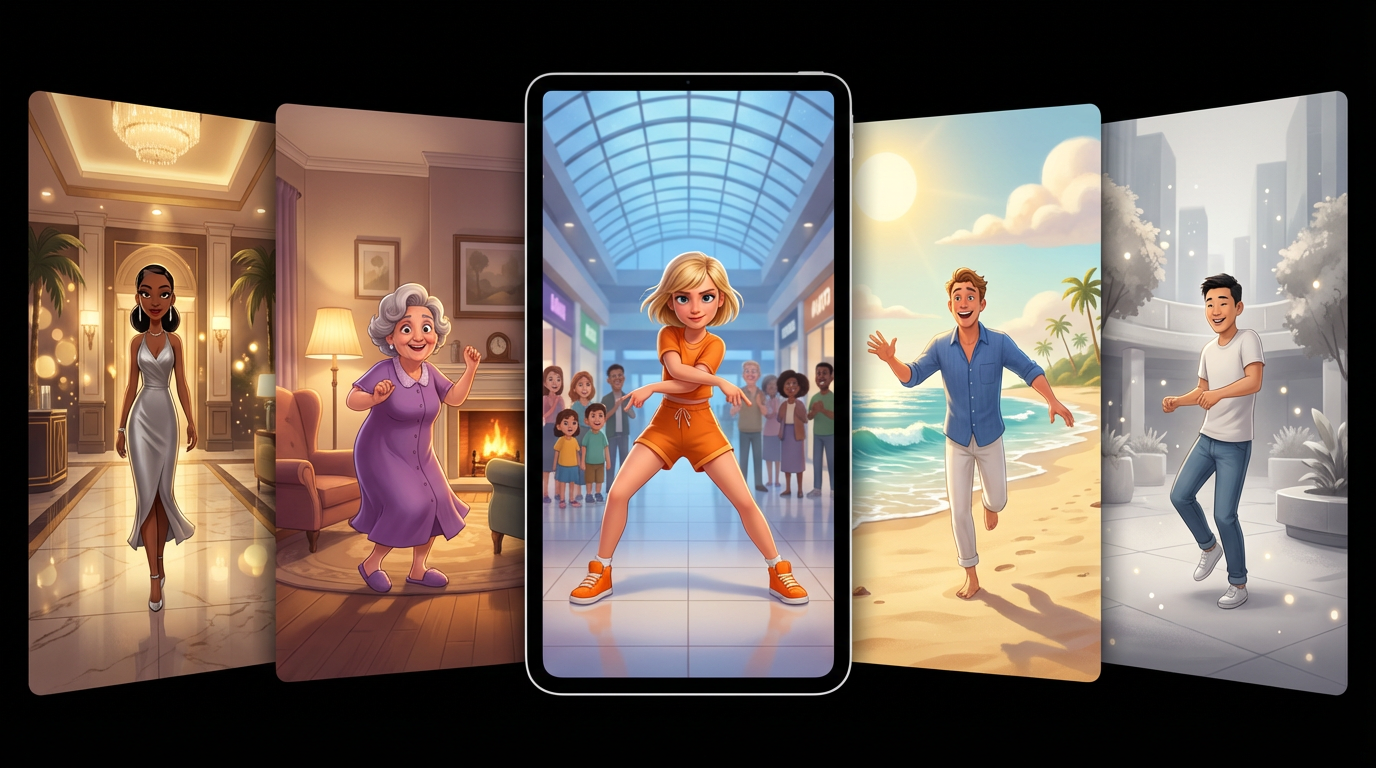
Every creator knows the moment. You have a character design that took weeks to perfect — the expression is right, the proportions are locked, the style is exactly what you imagined. Now you need that character to dance, to gesture, to deliver a monologue with natural lip sync. And suddenly the vision hits a wall. Traditional animation means weeks of keyframe work or a motion capture studio that costs more than your entire production budget. For most independent creators, that wall might as well be the end of the project.
The gap between having a great character and bringing it to life has always been the most expensive step in video production. Hollywood studios solve it with million-dollar mocap rigs and teams of animators. Everyone else has had to compromise — settle for static images, choppy puppet-style animation, or text-to-video outputs where the character’s face morphs into someone else between frames. That compromise defined independent video creation for decades. It no longer has to.
A new category of AI-powered tools is dismantling this barrier entirely. Motion transfer technology now extracts full-body movement, hand gestures, and facial expressions from any reference video and maps them onto a single character image — all in a browser, all in minutes. This is not an incremental improvement on old workflows. It is a fundamental redefinition of who can animate a character and how quickly they can do it. From basic motion retargeting to advanced identity-locked video generation, here is how motion control AI is transforming the way creators approach character animation.
Navigating Motion Transfer Basics
For most creators, the first encounter with character animation begins with a simple need: make this character move. A graphic designer has drawn a mascot for a brand. An indie developer has concept art for a game protagonist. A teacher has a cartoon avatar they want to use in lesson videos. The character exists on a static canvas, full of personality, but completely still. The creative intent is there. The technical path forward is not.
The traditional route from static character to animated video is punishingly complex. Rigging a 2D character for skeletal animation requires specialized software and a skillset that takes months to develop. Even a simple walk cycle demands understanding of joint hierarchy, weight distribution, and timing curves. Hiring a freelance animator for a thirty-second clip routinely costs hundreds of dollars and takes days to deliver. For anyone outside the professional animation industry, these barriers have historically been insurmountable — not because the ideas weren’t good enough, but because the tools were built for specialists.
Modern AI motion transfer sidesteps this entire pipeline. Instead of building a digital skeleton and animating it joint by joint, creators upload a reference video of any real movement — a person dancing, waving, speaking, or simply walking across a room — and the AI extracts the motion data and retargets it onto the character image. Platforms like motion control ai offer this capability directly in the browser, with no software installation, no rigging knowledge, and no hardware beyond a standard web connection. The engine analyzes the reference video’s full-body movement, hand poses, and facial expressions, then applies that motion to the uploaded character while preserving the original face structure, outfit details, and art style across every frame.
What this means for creators is that the animation bottleneck has effectively disappeared. A character that once would have taken a week to rig and animate can now be set in motion in the time it takes to upload two files and click generate. The creative energy that used to be spent on technical execution can now go into storytelling, experimentation, and iteration — the things that actually make videos worth watching.
Advanced Techniques for Character-Driven Video
Basic motion transfer solves the “make it move” problem convincingly, but ambitious video projects demand far more than movement alone. A character in a promotional video needs to maintain consistent identity across multiple clips. A virtual influencer must deliver the same recognisable face and body proportions in every post. A previsualization sequence for a film requires precise control over camera framing, subject behavior, and scene atmosphere. These are not beginner-level concerns, but they are the challenges that separate decent output from a production-ready asset.
Historically, maintaining character identity across animated sequences has been one of the hardest problems in computer graphics. Even high-end 3D pipelines struggle with identity drift — the subtle warping of facial features that accumulates frame by frame until the character no longer looks like the same person. Text-to-video models, for all their generative power, are particularly vulnerable to this phenomenon. Each frame is generated independently, with no structural anchor tying the character’s appearance back to a consistent reference. The result is often uncanny: a face that shifts ethnicity, age, or bone structure mid-clip, breaking the illusion and losing the audience.
Motion control AI approaches this challenge from a different architectural direction. Because the system begins with a source character image and treats it as the structural ground truth for every generated frame, identity consistency is baked into the process rather than being a post-generation patch. The character’s facial landmarks, proportions, and stylistic features are extracted once and enforced across the entire output duration. Modern implementations can hold this identity lock for up to thirty seconds of continuous video — long enough for a full dance routine, a product demonstration, or a complete monologue — without the subtle degradation that plagues frame-by-frame generation approaches.
The implication is significant. Character-driven video production, once the exclusive domain of studios with six-figure budgets, has become accessible to anyone with a clear creative vision. An independent filmmaker can storyboard scenes with motion-controlled characters before booking a single crew member. A brand team can turn a one-time mascot illustration into an entire season of social media content, driving the same character through different reference videos for each campaign. The technical ceiling has been lowered to the floor, and the creative ceiling now depends entirely on imagination.
Specialized Applications and Creative Possibilities
The versatility of motion control AI extends across industries and creative disciplines in ways that are only beginning to be explored. For short-form video creators on TikTok, YouTube Shorts, and Instagram Reels, the technology solves a persistent content problem: trending formats move fast, and the window for participating in a viral dance or gesture challenge closes within days. Motion transfer lets creators clone trending movements onto their own original characters instantly, skipping the choreography learning curve and jumping straight to publishing. A creator can maintain a consistent animated persona across dozens of trending clips without ever appearing on camera themselves.
For e-commerce brands and product marketers, the application is equally transformative. A single high-quality photograph of a product mascot or brand character can become months of animated advertising content. Seasonal campaigns no longer require separate photoshoots — the same base character image can be driven by different reference videos for holiday promotions, product launches, and social media engagement posts. The cost structure of animated brand content shifts from per-asset production to one-time character creation plus unlimited motion-driven variation.
Educators and online course creators occupy yet another use case that motion control AI serves naturally. An instructor can create a teaching avatar from a single photo, then drive that avatar through entire lesson sequences using reference videos of someone speaking and gesturing at a whiteboard. The avatar becomes a consistent, engaging visual presence across dozens of lessons without the instructor ever needing to set up a camera, lighting, or a recording studio. For educational content where instructor presence is correlated with student engagement, this capability removes the production logistics that keep many subject-matter experts from creating video courses at all.
Game developers and indie studios use motion control AI for rapid prototyping and previsualization. Concept art that would normally sit static in a design document can be set in motion within minutes, giving the entire team — from animators to level designers to producers — a shared visual reference for how a character should move and behave in the final game. This accelerates alignment across departments and reduces the costly iteration cycles that come from misinterpreting static reference sheets.
Across all these applications, the common thread is the removal of intermediaries between idea and execution. Motion control AI does not replace the creative vision of an animator, a filmmaker, or a brand strategist — it removes the technical gatekeeping that once made that vision prohibitively expensive or slow to realize for everyone outside a narrow professional tier. The technology handles the mechanical heavy lifting, and the creator gets to focus on what actually matters: the story, the character, and the emotional connection with the audience.
Conclusion
Motion control AI has not replaced the animator’s craft — it has dismantled the wall that stood between a character design and its first animated frame. What once required a mocap studio, a rigging specialist, and weeks of production time is now accessible through a browser, achieved in minutes, and available to anyone with a reference video and a creative direction. That shift matters not because it makes animation cheaper — though it certainly does — but because it changes who gets to participate in character-driven storytelling.
As the underlying models continue to improve, the fidelity gap between AI-driven motion transfer and traditional animation will narrow further. Hair physics, fabric simulation, and micro-expression fidelity are advancing with each generation of the technology. For creators, marketers, educators, and storytellers of every kind, the tools are already here. The only remaining question is what you choose to animate first.