

The Demand for Something Smaller; Smarter; and Stronger
People have been asking for a long time whether it is possible to have a bicycle that is genuinely powerful enough for daily use; genuinely compact enough to live in a small apartment; and genuinely convenient enough that it actually gets used rather than sitting untouched after the first enthusiastic week. For most of the history of folding bikes, the answer involved too many compromises. The bike either folded nicely but lacked the motor output to handle hills or it had a capable motor but folded into something that was still awkward to carry up a staircase. That gap has narrowed significantly in the past few years. The best foldable electric bikes available today genuinely deliver on all three, and understanding what makes that possible is the first step toward choosing the right one for your daily routine.
How Modern Engineering Solved the Performance vs. Size Problem
The tension between power and portability is real, and it took meaningful advances in battery technology, motor design, and frame engineering to resolve it. Early folding e-bikes often used heavy lead-acid batteries that added 15 to 20 pounds to the total weight, limiting who could carry them and how far they could reasonably go. Lithium-ion batteries changed that fundamentally. A modern 48-volt lithium battery pack stores far more energy per kilogram than its predecessors, which means today’s bikes carry meaningful range without carrying meaningful extra weight.
Motor efficiency has improved alongside battery technology. Brushless hub motors have become smaller; quieter; and more efficient over the past decade; capable of producing 500W to 750W of continuous output from a unit that adds very little to the wheel diameter. Mid-drive motors, which sit at the bottom bracket and drive the crankshaft rather than the wheel directly, offer even better hill-climbing efficiency at the cost of added complexity and price. For most everyday riders, a quality rear hub motor is the more practical choice: simpler to maintain, quieter in operation, and more than capable of handling the demands of city commuting.
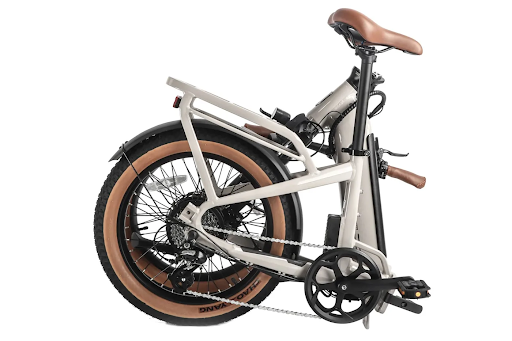
Frame design has evolved to keep the fold compact without sacrificing rigidity. Manufacturers now use hydroformed aluminum tubing, which allows complex curved shapes that distribute stress more effectively than simple round tubes. This means the fold joint, which is the structural weak point on any folding bike, can be made lighter without being made weaker. The result is a bike that folds to a genuinely portable size while still riding with the stability you would expect from a full-sized commuter.
The Everyday Rider Does Not Need a Compromise; They Need the Right Spec
One reason people underestimate foldable ebikes for daily use is a lingering assumption that compact means underpowered. That assumption made sense a few years ago; it does not hold up against current models. A 750W motor on a 20-inch-wheel foldable e-bike accelerates from a standing start with enough urgency to keep pace with city traffic. A 48V 15Ah battery covers a 25-mile round-trip commute with charge to spare, even when using full assist on every uphill section. These are not the specs of a novelty vehicle; they are the specs of a serious daily-use machine that happens to fold up when you are done with it.
Compact does not mean compromised. The best foldable ebikes today produce motor output and battery range that match or exceed many full-sized commuter bikes, with the added benefit of fitting under your desk when you arrive.
Guide on Selecting the Best Foldable Ebike for Daily Use
Daily use is a demanding test for any vehicle. Unlike occasional recreational riding, daily commuting means the bike is exposed to weather, varying surfaces, and heavy use five days a week, week after week. Here is what to evaluate carefully before making your choice:
- Motor power and torque: For flat city commuting; 500W provides comfortable performance. If your route includes significant hills or you regularly carry a heavy bag or cargo, 750W gives you meaningful headroom. Pay attention to torque figures as well as wattage. Torque (measured in Newton-meters) determines how the bike handles inclines, and higher torque at lower speeds is what makes hill climbing feel effortless rather than labored.
- Battery capacity and daily range: Match the battery capacity to your actual daily distance; not your aspirational distance. Calculate your round-trip commute; add 20 percent for safety margin; and choose a battery that covers that figure on a single charge. For most urban commuters, a 48V 13Ah to 15Ah battery is more than adequate.
- Charging time and removability: A battery that charges in 4 to 5 hours fits neatly into a workday, charged at the office while you work and ready for the ride home. Confirm the battery is genuinely removable from the frame; some models require tools or an awkward reach to access the charging which discourages consistent charging habits.
- Seat and handlebar adjustability: Daily riding on an ill-fitting bike is a recipe for back pain; wrist discomfort; and eventually abandoning the habit. Confirm the seat post and handlebars offer enough range to fit your height comfortably before purchasing.
- Braking system: Hydraulic disc brakes provide the most consistent stopping power across wet and dry conditions, which matters enormously in city traffic. Mechanical disc brakes are acceptable; rim brakes are not recommended for a bike used in all weather conditions.
- Display and connectivity: A clear backlit display showing speed, battery percentage, assist level, and distance is a basic requirement for daily use. Some models add Bluetooth connectivity for app-based tracking, which is useful but not essential.
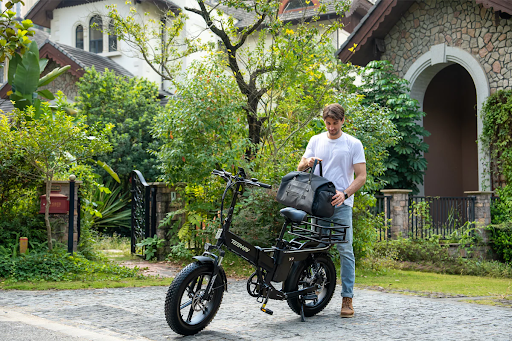
For riders who want a daily-use foldable e-bike that does not require choosing between performance and portability, the HovBeta Foldable Fat Tire e-bike addresses that balance directly. The fat tires smooth out the urban road surfaces that would make a narrow-tire bike feel harsh over a long commute; the motor handles inclines without requiring the rider to work against it; and the folding frame is designed to be genuinely compact rather than just technically foldable. For daily commuters who want a bike that performs consistently and stores conveniently, it is worth examining closely.
Motor Power; Battery Life; and Comfort: A Closer Look at What Matters Daily
Motor power is only useful if it is delivered smoothly. A well-tuned pedal assist system feels like a natural extension of your own effort; adding power proportionally as you pedal harder and backing off when you ease up. Poorly calibrated systems lurch; surge; and make the riding experience feel mechanical and unnatural. When evaluating a bike; look for reviews that specifically address how the assist feels in regular use rather than just citing the wattage figure.
Battery longevity over time is worth thinking about before purchase. Lithium-ion batteries degrade gradually with each charge cycle; losing a small percentage of capacity over hundreds of cycles. Quality batteries from reputable manufacturers retain 80 percent or more of their original capacity after 500 full charge cycles; which at daily use translates to roughly two years before any noticeable reduction in range. Batteries in cheaper bikes may degrade noticeably within six to twelve months of heavy use.
Comfort on a daily-use foldable ebike often comes down to details that do not appear in spec sheets. Ergonomic grips that reduce vibration transmission to the hands. A saddle that suits your riding position rather than the most cost-effective option available. Pedals with enough grip to keep your foot secure in wet weather. These details do not make or break a bike on a test ride; but they accumulate into a meaningful difference in how you feel after two years of daily commuting.
Practical Use Cases: Where Foldable Ebikes Genuinely Shine
The daily commuter with a transit gap: You live 8 miles from the office; 6 miles of which are well-served by train. The first and last mile on each end are the problem. A foldable ebike covers those gaps faster than walking; more reliably than a scooter; and without the parking anxiety of a car. It goes into the train carriage with you; sits under your desk at the office; and charges while you work. The entire commute becomes a solved problem.
The errand runner: Grocery runs; pharmacy trips; picking up a parcel from a collection point three stops away on the bus; taking a document to a government office across town. These are the trips that add up to an enormous amount of time and money when done by car or rideshare. An ebike handles all of them faster and more cheaply; and a foldable model means you can bring it into shops rather than locking it outside.
The part-time office worker: Three days in the office; two days working from home. On office days you cycle; on home days the bike folds away and your flat functions normally. There is no dedicated space required; no disruption to your living arrangement; just a bike that appears when needed and disappears when not.
The student on a large campus: Lecture halls spread across a sprawling university campus are a classic foldable ebike use case. The bike gets you from one end of campus to the other in a fraction of the walking time; folds away to fit in a lecture hall without blocking aisles; and does not require a parking permit that costs more than a semester of coffee.
Conclusion: Efficiency Is the New Standard for Smart Urban Transport
The idea that compact transport cannot also be powerful transport has been effectively disproved by the current generation of foldable electric bikes. Today’s best models deliver motor output; battery range; and build quality that hold up against daily use without demanding dedicated storage space; a garage; or a complicated maintenance routine. What they require is a thoughtful purchase decision: matching the bike’s specifications to your actual daily distance; your actual storage situation; and the actual terrain you ride. Get that match right and what follows is a commuting experience that is faster; cheaper; and more enjoyable than the alternatives you were using before. Efficiency in daily life does not usually come from dramatic changes; it comes from consistently better tools applied to consistent tasks. A well-chosen foldable ebike is exactly that kind of tool; and the difference it makes compounds quietly over every week and month of use.