

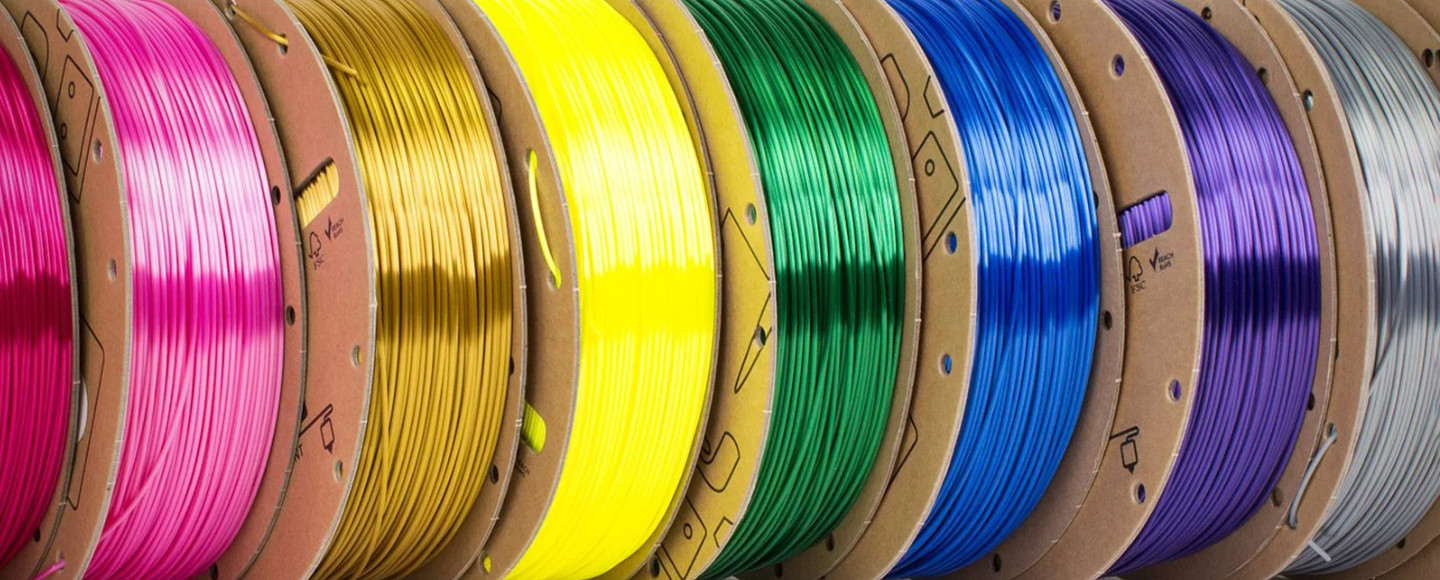
Walk into any conversation about 3D printing filament and you’ll quickly notice there’s no shortage of opinions about which brand or formulation is “the best.” The truth is less exciting but far more useful: there is no single best filament, only the right filament for what you’re actually trying to build. This guide skips the hype and walks through how to match your project to the right PLA formulation, using eSUN’s PLA+ and PLA Basic lines as the reference point, since together they cover the vast majority of everyday 3D printing needs.
Start With the Question: What Does This Part Need to Survive?
Before looking at price or brand reputation, ask what stresses the finished part will actually face. A phone stand that sits on a desk faces very different demands than a drone arm that might crash into the ground at speed. Sorting your project into one of a few broad categories makes the filament choice much easier.
Category 1: Functional Parts and Everyday Tools
If you’re printing brackets, hooks, tool organizers, phone mounts, cable clips, or anything that will be handled, bumped, or subjected to mechanical stress, durability matters more than cost savings. This is where PLA+ formulations earn their keep. The added toughness additives in eSUN’s PLA+ reduce the chance of a part snapping under everyday stress compared to standard PLA, which matters a great deal for anything you’re actually going to use rather than just display.
For this category, a reliable PLA Filament is generally worth the modest price premium over basic PLA, since a single failed functional part often costs more in wasted material and reprint time than the price difference between spools.
Category 2: Prototyping and Fit-Testing
If you’re printing a part specifically to check dimensions, tolerances, or how components fit together before committing to a final production material, mechanical strength is almost irrelevant. What matters here is dimensional accuracy and quick, reliable printing so you can iterate without burning through expensive filament. This is squarely PLA Basic territory — it’s more economical, prints predictably, and gets the job done without paying for toughness properties you won’t actually need for a test piece that might get thrown away after a single fitting check. A dependable PLA Basic spool is ideal for this kind of iterative work.
Category 3: Miniatures, Models, and Display Pieces
Tabletop gaming miniatures, architectural models, cosplay props, and decorative sculptures live or die by surface finish and fine detail rather than mechanical toughness. Standard PLA has a long track record in this space precisely because it captures fine detail well and finishes with a clean, consistent surface. Painters in particular tend to favor standard PLA because its slightly more uniform surface takes primer and paints evenly. For this category, a well-made Basic PLA spool is typically the smarter and more economical choice.
Category 4: Educational and Hobbyist Projects
For classrooms, workshops, and hobbyists who print frequently but on a budget, cost-per-spool matters as much as performance. PLA Basic’s lower price point makes it easier to stock multiple spools without a large upfront investment, which is particularly useful in group or educational settings where prints are frequent and often experimental in nature.
A Simple Decision Framework
If you’re still unsure which to buy, this quick framework covers most situations:
- Will it be handled, dropped, or flexed regularly?→ Choose PLA+
- Is it a one-off test or prototype?→ Choose PLA Basic
- Is visual quality more important than strength?→ Choose PLA Basic
- Will it be used outdoors or in variable temperatures?→ Neither PLA formulation is ideal long-term; consider PETG or ASA, but for short-term or indoor use, PLA+ offers more resilience than standard PLA
- Are you buying in bulk for frequent low-stakes printing?→ PLA Basic keeps costs manageable
Why Brand Consistency Matters More Than People Expect
One detail that often gets overlooked in buying guides is how much brand consistency affects your printing experience over time. Once you’ve dialed in your slicer profile for a particular filament — nozzle temperature, retraction, cooling, speed — switching brands frequently means re-tuning those settings each time, since diameter tolerances and pellet formulations vary between manufacturers.
This is one of the practical advantages of sticking with a single manufacturer’s PLA+ and PLA Basic lines rather than mixing brands. Because both are produced with similar manufacturing standards, switching between the two for different projects requires minimal profile adjustment, which saves time for anyone printing regularly across multiple project types.
Budgeting for a Multi-Spool Workflow
Many experienced makers keep at least two spools loaded in rotation: a PLA Basic for everyday, low-stakes printing, and a PLA+ reserved for parts that need to hold up to real use. This approach balances cost against durability without requiring you to guess which properties each project needs on a case-by-case basis, since the split is already built into your available materials.
If you print occasionally, buying a single spool of each and using this guide’s categories to decide which to load is usually enough. If you print frequently across a range of project types, building a small rotation of both formulations pays for itself in fewer failed prints and less time spent second-guessing which material suits which job.
Final Recommendation
There’s no universally “correct” PLA filament — only the right one for the specific part you’re about to print. For functional, handled, or mechanically stressed parts, PLA+ is worth the price difference. For prototypes, test prints, and decorative work where surface finish matters more than toughness, PLA Basic remains an excellent, cost-effective default. Understanding this distinction before you buy — rather than after a part fails — is the single most useful habit you can build as you grow your filament collection.
Frequently Asked Questions
- Which filament should I buy first if I only want one spool?If you’re not sure yet what you’ll be printing most, PLA Basic is the safer general-purpose starting point, since it’s more economical and handles prototypes, decorative prints, and casual printing well.
- Is PLA+ worth it for someone who only prints occasionally?It depends on what you print. If your occasional prints are mostly decorative or test pieces, PLA Basic is sufficient. If even your occasional prints include functional parts that get handled or stressed, PLA+ is worth the extra cost.
- Can PLA+ replace PETG or ABS for tougher projects?Not entirely. PLA+ improves on standard PLA’s brittleness, but it still doesn’t match the heat resistance or long-term durability of PETG or ABS for genuinely demanding mechanical or outdoor applications.
- How much more expensive is PLA+ compared to PLA Basic?The price gap varies, but PLA+ typically carries a modest premium due to its additional toughness additives. For most hobbyists, this difference is small enough to be worthwhile on parts where durability actually matters.
- Should schools or workshops buying in bulk choose PLA+ or PLA Basic?For group settings with frequent, often experimental printing, PLA Basic is usually the more practical bulk choice due to its lower cost per spool, with PLA+ reserved for specific projects that need extra durability.