

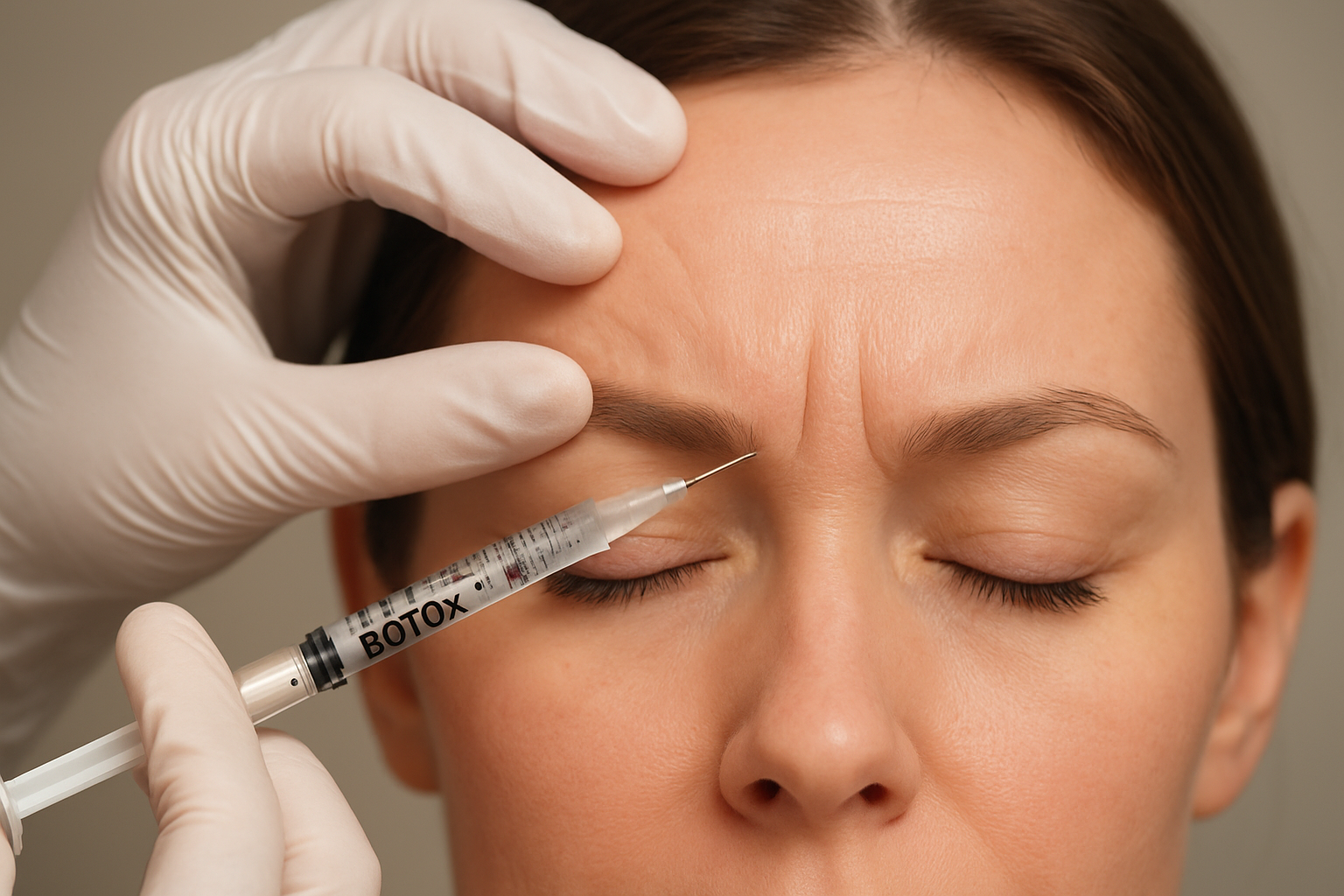
What Is Botox and How Does It Reduce Wrinkles?
Botox contains botulinum toxin type A. This neurotoxin blocks acetylcholine release at neuromuscular junctions. Muscle paralysis occurs 24 hours to two weeks following injection. A 1994 study demonstrated effectiveness for reducing facial wrinkles, establishing the foundation for cosmetic applications. The FDA approved onabotulinum toxin A for glabellar frown lines in 2002.
The mechanism targets dynamic wrinkles. Dynamic wrinkles form from repeated muscle contractions during facial expressions. Botox intercepts nerve signals to muscles, preventing excessive contractions. Existing wrinkles settle and ease over time. New line formation is reduced, resulting in a smoother facial appearance.
What Clinical Evidence Supports Botox Efficacy?
Research from 2014 to 2024 indicates Botox consistently reduces the severity of dynamic facial wrinkles with high patient satisfaction across different treatment areas. One clinical study showed significant differences in wrinkle elimination at rest and in action when assessed at week 1, week 4, and week 16. Patients demonstrated positive satisfaction responses without upper eyelid ptosis.
Clinical trials document measurable improvements. Studies evaluating praBoNTA for moderate to severe glabellar lines and onaBoNTA for forehead lines involved single 20-unit doses. Follow-up extended to 150 days and 180 days, respectively. Efficacy was defined by one-grade improvement or more on photonumeric wrinkle severity scales.
Patient satisfaction with overall facial appearance rose by 28% following treatment. Participants indicated they perceived themselves as looking approximately 5.6 years younger after treatment.
How Long Do Botox Results Last in Viera Patients?
Botox Viera, FL effects last three to six months. Duration depends on treatment area, patient age, and injection dosage. Injection results typically last three to four months, requiring repeat treatments to maintain wrinkle reduction. When used for underarm excessive sweating, Botox decreases sweating by 82-87%, with dryness typically lasting 4 to 12 months.
The average time between treatments is four months. Some patients extend timeframes with continued use. Metabolic differences cause individual variation in duration.
What Are the Ideal Candidate Criteria for Botox?
According to American Society of Plastic Surgery survey data, 57% of Botox patients are between 40 and 54 years old, followed by those 55 years or older at 23% and 30-39 year olds at 18%. Only 1% of patients fall between 20-29 years old. More recent data from 2020 shows 2,503,229 people ages 40-54 received Botox, representing the highest volume age group.
Candidates must be 18 years or older. Ideal candidates have dynamic wrinkles, including forehead wrinkles, crow’s feet, frown lines, and neck bands. Realistic expectations regarding results and understanding treatment limitations are essential. Patients must not be pregnant, lactating, or have neuromuscular diseases, botulinum toxin allergies, or local acute infections.
Which Facial Areas Respond Best to Botox Treatment?
Common treatment areas include forehead lines, glabellar frown lines (between eyebrows), lateral canthal lines (crow’s feet), upper eyebrows, perioral region (around mouth), chin, and neck. Each area requires specific unit dosages. Upper lip treatment requires the least Botox at 2-4 units. Forehead and glabellar treatments typically use 20-40 units per area.
Botox addresses “dynamic” wrinkles caused by facial muscle contractions. Static wrinkles present at rest require alternative treatments like dermal fillers.
What Medical Applications Does Botox Serve?
Beyond cosmetic applications, Botox treats multiple medical conditions. FDA-approved medical uses include excessive sweating (hyperhidrosis), chronic migraines, overactive bladder, and certain muscular disorders. This dual functionality contributes to over 23 years of proven clinical success throughout Brevard County.
Neurotoxin therapy effectively smooths forehead lines, relaxes frown lines, and softens crow’s feet while offering medical benefits such as reducing excessive sweating, alleviating muscle spasms, and lessening migraine intensity.
How Should Patients Prepare for Treatment in Viera?
Treatment preparation minimizes complications. Patients should avoid blood-thinning medications, alcohol, and supplements that increase bruising risk (aspirin, ibuprofen, vitamin E, fish oil) for one week prior. Discuss all medications and health conditions during consultation.
Topical anesthetic creams can be applied before injection to alleviate discomfort. The injection activity takes less than 10 minutes to complete. Sessions last no more than one hour, depending on treatment areas.
What Post-Treatment Care Optimizes Results?
Patients should remain upright for the first 4 hours to prevent the treatment from migrating to other areas. Avoid touching the treatment region, engaging in strenuous activity, or lying flat for at least four hours.
For 24 hours after treatment: avoid rubbing treated areas, refrain from intense exercise, skip facial treatments or massages, and avoid alcohol consumption. Heat exposure (saunas, hot tubs, direct sun) should be minimized. Patients should avoid underarm hair removal procedures, such as laser or electrolysis, for at least 2 weeks when treating hyperhidrosis.
What Distinguishes Botox from Alternative Neuromodulators?
Three primary botulinum toxin type A formulations exist: onabotulinumtoxinA (Botox), abobotulinumtoxinA (Dysport), and incobotulinumtoxinA (Xeomin). Xeomin contains no additional protein that Botox does, earning it the designation of “naked” botulinum toxin. Certain patients develop fewer antibodies to Xeomin, potentially making it more effective long-term.
Dysport spreads more extensively from the injection site, making it particularly useful for treating larger areas such as broad forehead wrinkles. Dysport offers a quicker onset of action, often showing results faster than other neurotoxin products. This rapid effectiveness attracts those seeking immediate improvements.
What Qualifications Should Viera Patients Seek in Providers?
Board-certified practitioners with specialized training in facial anatomy deliver optimal results. Enfield Royal Med Spa Viera, Florida, employs board-certified injector Ms. Eva Acevedo, who has a background in medical dermatology with 10+ years’ specialization. Practitioners should thoroughly analyze facial anatomy to administer botulinum toxin type A for optimal wrinkle reduction.
Provider expertise determines injection precision, appropriate dosing, and natural-looking outcomes. Practitioners ranking in the top 1% nationally for all brands of Botox and fillers demonstrate extensive experience. Experience with thousands of injections develops the subtle art and science required for superior aesthetic results.
How Much Does Botox Cost in Viera, Florida?
The average cost of Botox injections is approximately $530. A single unit of botulinum toxin costs between $15 and $20 on average. Unit requirements depend on wrinkle severity and treatment aggressiveness.
Some Viera clinics advertise pricing as low as $9/unit. “Baby Botox” (preventative treatment) might receive 10 units per area. Standard Botox typically uses 20 to 40 units per area. Total costs vary based on treatment areas, unit dosage, and provider expertise. Membership programs can reduce per-unit costs.
What Safety Profile Does Botox Demonstrate?
Botox represents a minimally invasive, FDA-approved treatment requiring no downtime. Common side effects include bruising, pain, and redness at injection sites, along with flu-like symptoms, headache, nausea, and temporary facial weakness. These typically resolve within days.
Serious adverse events remain rare when administered by qualified providers. Potential complications include eyelid ptosis (drooping) and the development of antibodies with repeated use. Injections are practically pain-free using a short, fine needle in precise points near unwanted creases.
When Do Results Become Visible After Treatment?
Results start to be noticeable approximately 2 to 4 days after treatment, with full effects usually noted within 2 weeks. Patients begin to see results within the first week, typically within 3-4 days. The process is gradual and methodical. Muscles begin to relax, and wrinkles gradually soften.
Immediate results should not be expected. The neurotoxin requires time to block nerve signal transmission. Patients should attend all scheduled sessions without skipping appointments for optimal outcomes.
Can Botox Be Combined with Other Aesthetic Treatments?
Many patients combine other treatments with Botox to maximize results and appointment efficiency. Common combinations include dermal fillers (addressing different wrinkle types), laser treatments (improving skin texture and tone), chemical peels (enhancing skin quality), and microneedling (promoting collagen production).
Fillers target static wrinkles and restore volume. Botox addresses dynamic wrinkles from muscle movement. Combined protocols deliver comprehensive facial rejuvenation. Providers determine appropriate treatment sequencing and timing.
What Trends Are Emerging in Botox Usage?
Between 2019 and 2022, the number of people 19 and younger receiving neuromodulator injections increased by 75%, with a 71% rise in adults 20 to 29. This increase is driven primarily by preventive “baby Botox.” Younger patients inject Botox into facial areas without defined wrinkles, attempting to prevent their formation.
Age groups 20-29 and 30-39 both saw more than an 8 percent increase, tracking against the trend of younger patients getting preventative Botox. Social media transparency and normalization of cosmetic procedures drive this demographic shift. Over 6.2 million Botox treatments were administered in 2021, making it the most popular non-surgical treatment.
What Makes Enfield Royal Med Spa Distinctive in Viera?
Enfield Royal Med Spa brings advanced Botox expertise to Viera with board-certified practitioners who thoroughly analyze facial anatomy. The facility combines 20 years of experience with personalized care and cutting-edge technology. State-of-the-art equipment and safety-driven protocols deliver natural, transformative results.