

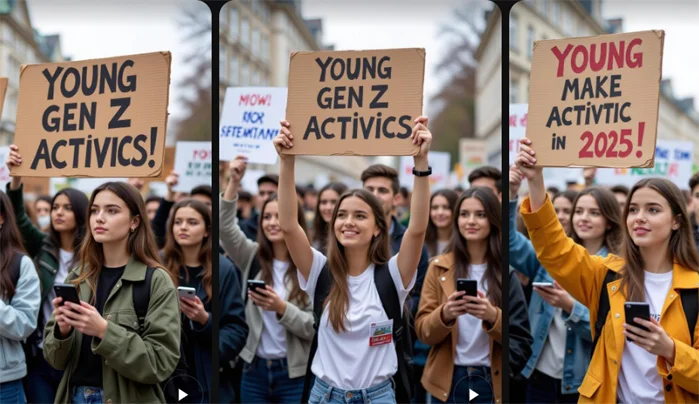
In 2025, the world witnessed an unprecedented wave of youth‑led political activism with Generation Z at its helm — reshaping public discourse, influencing government stability, and redefining what political participation looks like in the 21st century. From mass protests in Europe to grassroots movements in Asia and Africa, young people are no longer relegated to the sidelines; they are central players in the global political arena.
Who Is Gen Z?
Generation Z broadly includes individuals born between the late 1990s and early 2010s. Raised in an age of rapid digital connectivity, economic uncertainty, and ecological crisis, this generation displays a heightened sense of social awareness and global perspective. Equipped with social media savviness and a penchant for instant organization, Gen Z has harnessed digital tools to amplify concerns about equality, corruption, climate justice, and economic opportunity.
Read More: The Evolution of Sports Journalism
Bulgaria’s Gen Z Protests Shake a Government
Perhaps one of the most striking examples of Gen Z’s impact came in Bulgaria, where weeks of protests led by young demonstrators culminated in the collapse of the government in December 2025. Tens of thousands of youths marched against systemic corruption and economic inequality, demanding transparency and accountability from political elites. What began as small demonstrations grew into a nationwide movement that shook the nation’s political core and forced the incumbent leadership to resign just weeks before Bulgaria was due to formally adopt the euro. The Wall Street Journal
These protests were not isolated; similar demonstrations have taken place in countries like Nepal, Indonesia, and Tanzania — all pointing to a broader pattern in which younger generations are demanding broader representation and deeper reforms.
Drivers of Youth Political Engagement
Digital Connectivity and Mobilization
Gen Z’s use of social media platforms such as TikTok, Instagram, and X has transformed political mobilization. Hashtags, viral videos, live streams, and digital petitions have shortened the feedback loop between grassroots frustration and global visibility — allowing local grievances to become global conversations overnight.
Economic and Environmental Pressures
Many young people in 2025 are entering adulthood amid stagnant wages, rising living costs, and the intensifying impacts of climate change. These socioeconomic pressures have led many to question traditional political structures and demand systemic change that prioritizes job security, environmental protections, and equitable access to opportunities.
Read More: French Media Personalities
Global Youth Movements Beyond Bulgaria
While Bulgaria grabbed international headlines, Gen Z activism is a broader global phenomenon. Youth groups have been highly active in climate advocacy, demanding stronger policies to curb emissions and expand sustainable infrastructure. In countries like India and Pakistan, student organizations have organized climate strikes and urban protests calling for clean air rights and renewable energy transitions.
Similarly, anti‑corruption movements are gaining traction in parts of Africa and Latin America, often led by young activists who reject entrenched political patronage and call for openness in government finance and public procurement.
Challenges and Criticisms
Despite their energy and innovation, youth movements face significant obstacles. Governments have sometimes responded with restrictions on protests, censorship, and surveillance. In other contexts, authorities have attempted to delegitimize young activists as naïve or externally influenced.
Moreover, the decentralized nature of many youth movements makes sustained policy implementation difficult; without unified leadership or concrete political platforms, some movements risk losing momentum or fragmenting under pressure.
Looking Ahead: The Political Landscape in 2026 and Beyond
As the world moves into 2026, the imprint of Gen Z activism remains undeniable. Whether through protest, electoral participation, or digital advocacy, Generation Z will continue to push for systemic changes that reflect their values: transparency, sustainability, and equity. Political leaders and institutions will need to adapt — listening to and incorporating the priorities of this emerging generation if they hope to maintain legitimacy and stability.
Conclusion
The rise of Gen Z activism represents more than a moment; it marks a shift in global political dynamics. With technology as their megaphone and a generation‑wide urgency for justice, young people in 2025 have redefined what it means to be politically engaged — a trend that will shape governance, policy, and social movements for years to come.